More Stories
From the Blog
Over 200 Native Plants Added To Still Hopes Forest
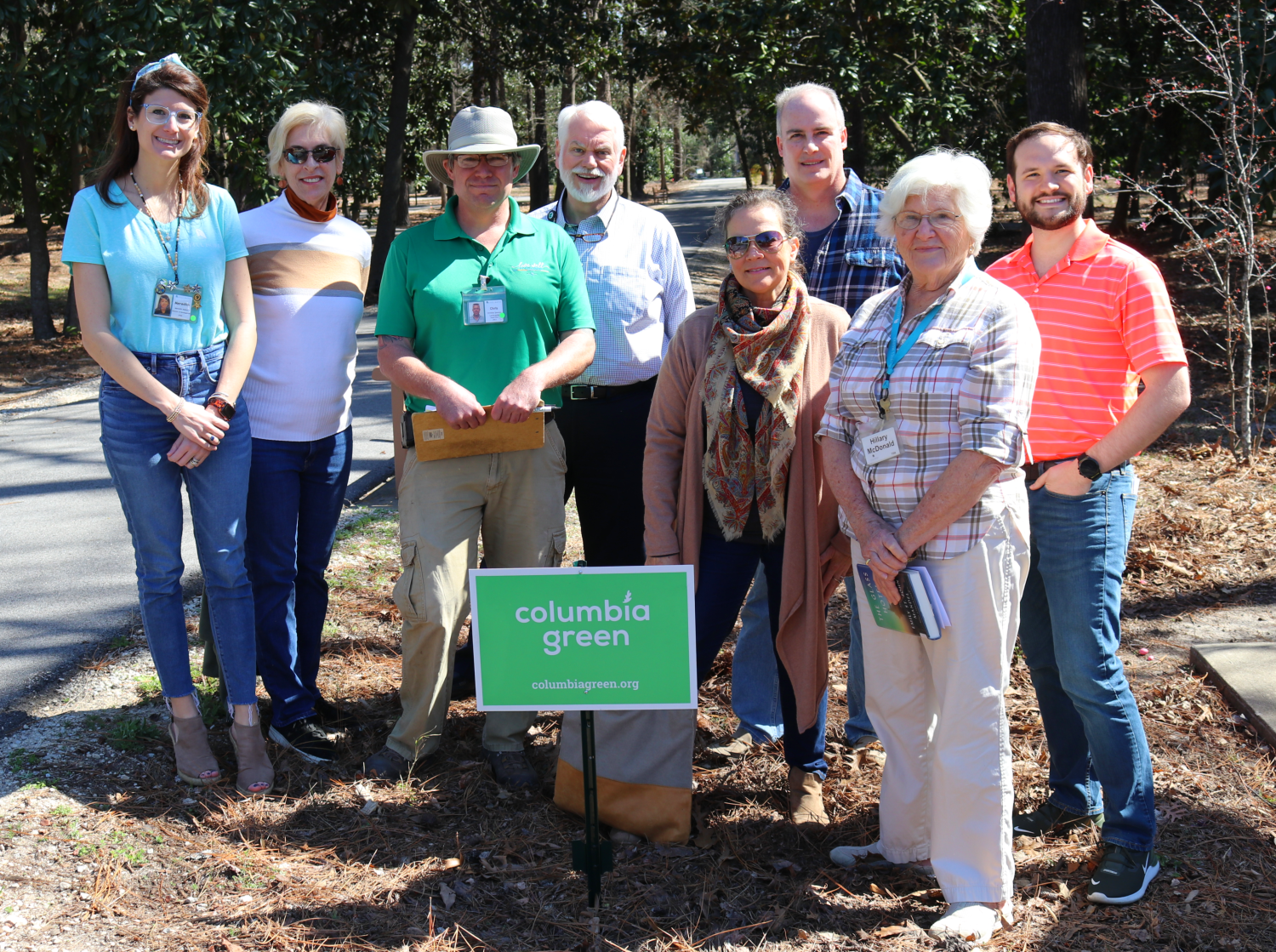
The Still Hopes Memorial Forest, also known as The Forest, was given as part of the original gift from the Guignard family to Trinity Episcopal Cathedral. The purpose of the 44 acres that is now known as Still Hopes, which encompassed the Guignard Mansion and Forest, was to provide a place for seniors to live their most vibrant life. The Forest is currently served through an endowment to maintain this wooden area in perpetuity. The Forest is a recreational space including walking paths and a retention pond and is enjoyed by residents, employees, and the surrounding community. Through a collaborative effort of the Still Hopes Development Office and the Still Hopes Garden Committee, a proposal was submitted to Columbia Green to enhance The Forest by increasing the plant diversity of this space while maintaining its natural state and serene escape. The proposal was approved by the Columbia Green grants committee, which allowed for over 220 native South Carolina canopy and understory trees and shrubs to be purchased by the Still Hopes Grounds Supervisor, Chris Spearen. The Still Hopes Community also gave a matching gift equal to the value of the grant, as well as provided in-kind labor to really elevate this project to its greatest potential and further the diversity and interest. Chris brings a wealth of knowledge, and we were very fortunate to have his expertise and his team for this special project between Still Hopes and Columbia Green. As these plants flourish over the coming months and years, we know they will be appreciated by many! (The photos associated with this post were taken when members of the Columbia Green grants committee visited Still Hopes to walk the Forest with Chris Spearen and see the new plantings in person!) Complete Listing of Plants Added To The Forest 15 gal. Eastern Redbud (2) 15 gal. Flowering Dogwoods (5) 15 gal. Bay Magnolias (3) 15 gal. Service Berry (1) 15 gal. Laurel Oak (2) 15 gal. Chestnut Oak (2) 7 gal. Witch Hazel (4) 7 gal. American Snowball (1) 7 gal. Red Maples (2) 5 gal. Eastern Red Cedars (3) 3 gal. Dwarf Palmetto (18) 3 gal. Oak Leaf Hydrangea (25) 3 gal. Leucothoe (9) 3 gal. Illicium (6) 3 gal. Native Azaleas (19) 3 gal. Shrubby St. John's wort (10) 3 gal. Big Leaf Magnolia (16) 3 gal. Fothergilla (9) 3 gal. Franklinia (3) 3 gal. Sweet Shrubs (6) 3 gal. Chalk Maples (3) 1 gal. Live Oaks (3) 1 gal. Red Buckeyes (3) 1 gal. White Fringe Trees (5) 1 gal. Black Tupelo (3) 3 qt. Walter's Viburnum (5) 3 qt. Paw Paws (5) 3 qt. Beauty Berries (5) 3 qt. Coral Beans (5) 3 qt. Sweet Pepper Bush (15) 3 qt. Oak Leaf Hydrangea (5) 3 qt. Ink Berry Hollies (12) 3 qt. Sweet Spire (5) 3 qt. Sourwood (3) 3 qt. American Hornbeam (3)
A Peek into Gamecock History: The Story of Nelson Weston
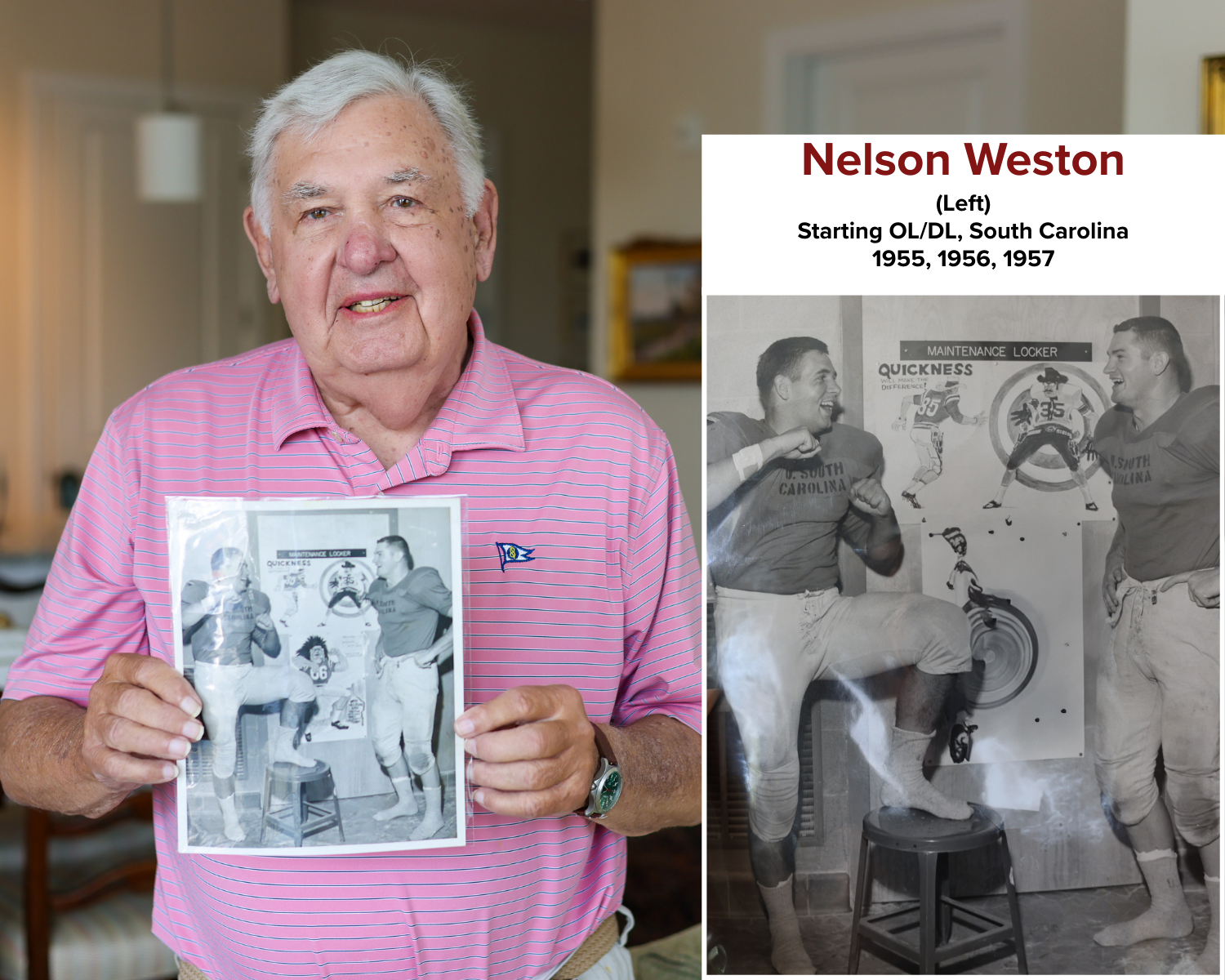
In the early 1950s, long before the roar of Sandstorm or the bright lights of today’s stadium experience, Gamecock football had a different rhythm. Players suited up without facemasks, crowds were smaller but loyal, and the football players, like a young lineman named Nelson Weston, played both sides of the ball. For Nelson, those years weren’t just about wins or stats. They were about grit, adventure, and most of all...the lifelong friendships forged on and off the field. Now a proud resident of Still Hopes, Nelson reflects on a life shaped by those unforgettable Saturdays in Garnet and Black. “One of the things I remember most was the trips,” he recalls. “Going to Charlottesville, going to Austin. And we also went to West Point. You got to go a lot of places you wouldn’t normally get to go.” Those trips were just the beginning as Nelson and his co-captain also spent time at Shaw Air Force Base, where they even flew fighter jets! Surely a unforgettable perk of being part of the ROTC program. And then there were the post-season celebrations, the ones that are vivid in his mind decades later. One memory in particular was his favorite. “[My favorite memory] was celebrating after my senior year, the last game I had,” he says. “About four or five of us went to the beach.” Weston also recalls that back then, the crowds were smaller and the energy was different — except during big rivalry games like Duke or NC State, when the stands would fill to the brim. But Nelson and “the boys,” as he fondly calls his teammates, played for the game but they also played for each other. “The bond we had was special,” Nelson says. Many of those teammates remained close friends throughout their lives. That sense of brotherhood, he explains, was what made those years so meaningful. After graduation, Nelson traded in his helmet for a stethoscope, pursuing a career in pediatrics. He went on to found Sandhills Pediatrics, becoming a trusted and well-loved doctor in the Midlands. Though his career took him far from the field, his athleticism and leadership during his playing days left a lasting impression, one that followed him through every phase of his life. Today, Nelson is still a loyal Gamecock, using his season passes to cheer on the team with his family. “I go with Dot,” he says, referring to his wife. “And I go with my grandkids. I’ve got eight tickets and two parking places.” Those Saturdays in the stadium, surrounded by family, are a reminder that Gamecock football is more than just a game. It’s a legacy. As you listen to Nelson, it becomes clear that his story isn’t just about football, it’s about family, friendship, and finding joy in every stage of life. His journey from the fields of Williams-Brice to the halls of Still Hopes is a reminder of what it means to be part of the Gamecock family. It’s a bond that doesn’t fade with time; it only grows stronger. Forever to Thee, Nelson. By Amanda Anderson Amanda is a senior broadcast journalism major at the University of South Carolina and a guest writer for Still Hopes through her media and communications internship.