More Stories
From the Blog

Still Hopes Ranks in 2022 Top 15 for “Best in Wellness” by International Aging Industry Association
Research shows that movement, fitness and wellness impact longevity. Happily, a recent announcement from the International Council on Active Aging (ICAA) revealed that Still Hopes, in particular, is among the very elite when it comes to enhancing the wellness and longevity of their residents. The ICAA, in conjunction with NuStep LLC, has honored the top 25 senior living communities as Beacon Award winners for four years. The most recent award reveals that Still Hopes remains in the top 20 in 2022, having moved up from 17th to 13th place in North America (including the United States and Canada) for “Best in Wellness”. Still Hopes has ranked in the Beacon Award's Best In Wellness for Senior Living top 20 for three years since the award was conceived four years ago. It remains the only community in all of South Carolina to receive such an honor. Still Hopes Director of Wellness, Taylor Hall captured the Wellness team's excitement, “It’s wonderful that our community is receiving international recognition for promoting a healthy and wellness-focused lifestyle! We take pride in empowering our residents to incorporate wellness practices into their daily routines. We're amazing to see how our community has become invested in supporting each other’s health journey, how we’ve become a family committed to helping one another live our best lives.” The award was created to highlight the top organizations that embrace and weave wellness into their community culture. Highlighting these organizations and their programs helps others in the Senior Living field learn and adopt senior living wellness best practices and grow senior wellness overall. The awards were based on seven key dimensions of wellness: emotional, physical, intellectual, social, spiritual, vocational and environmental. According to the ICAA and NuStep, these seven key attributes “collectively enrich wellbeing, quality of life, overall health and longevity.” “Aging well involves more than simply programs and special events, but requires an intentional, ongoing pursuit of potential and possibilities,” said Colin Milner, ICAA founder and CEO. “We’re pleased to recognize senior living communities that excel at fostering a mindset and environment that emphasizes promise and opportunities.” Click here to learn more about life at Still Hopes. Want an up close and personal look? Schedule a tour by calling us at 803-739-5040 or clicking here.

Still Hopes Raises More Than $6,000 to Fight Alzheimer’s
Thanks and kudos to all who contributed and supported the Nu Stepping to End Alzheimer's event at Still Hopes Skilled Nursing West Columbia, SC! As of this moment, we have raised $6,262! We will not close out the fund raising account until the end of the first week of July, so you can still donate. Don't miss the chance! See any Wellness staff to contribute. Special shout outs to my Wellness Team . . . Taylor and Sam. These guys worked like maniacs to make this event happen and keep it organized! Ride scheduling and money management were professionally handled and went off without a hitch. Sam copied huge amounts of music to the iPod and created the slide show. Taylor posted on Facebook leading to the event and all day long Monday. Both worked 12 hours yesterday and stayed late Friday to decorate. Special should out to Trez for helping us set up the Power Point and sound system. Sherry supported us in any way we asked. Wendy, Jeanette, Nicole, Autumn, and Margaret in Accounting were awesome in keeping track of the money, sending it to the Alzheimer's Association, and setting up Resident and Employees monthly billing and payroll deduction forms. Sharee was indispensable in helping me plan the snacks, and she and Ellen kept the snack table perfectly managed. Chris moved all the machines and helped with decoration and clean up. ALL who rode . . . pat yourselves on hte back! Good for you! This teamwork is but one example of what makes Still Hopes such a special place to work.

Still Hopes Nationally Recognized For Wellness Program
We always knew Still Hopes Retirement Community West Columbia SC was a special place when it came to our focus on the seven dimensions of wellness, but now it has been recognized internationally! Still Hopes has received the ICAA NuStep Beacon Best in Wellness Award, which means we are recognized as one of the top 25 “Best In Wellness” senior living communities in west Columbia, SC and North America. The Award recognizes organizations who successfully foster an environment that is centered around wellness when it comes to the staff and residents. These communities who received the Award were considered to be the best and brightest, shining as a guiding light for all senior living communities. A recent ICAA survey found that 59% of senior living communities plan to become “wellness centered” in services and staffing by 2023. However, Still Hopes adopted this wellness centered focus almost 20 years ago and we are so proud to be leading the way in this area. “Still Hopes is way ahead of the industry in promoting resident and staff centered wellness. We are now internationally recognized as one of the very best places to live and work – a place where we can all live our best lives!” says Denise Heimlich, Still Hopes’ Director of Wellness.
Still Hopes Leads the Way in COVID-19 Vaccine Clinic
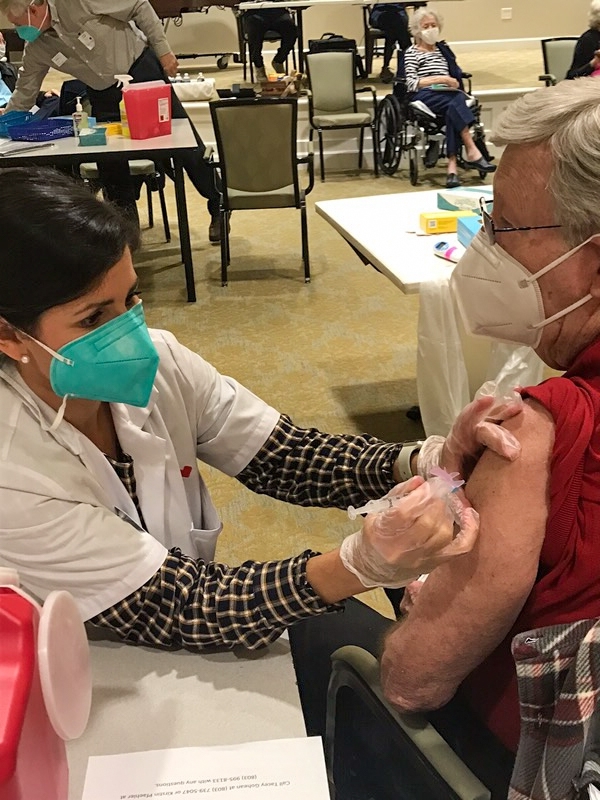
As the rest of the world has been somberly watching a slow rollout of the COVID-19 vaccine, life inside of Still Hopes Senior Living Community West Columbia, SC is bustling with excitement. On January 5 and 8, Still Hopes hosted three COVID-19 vaccination “clinics” for staff, licensed area residents in our Greenway Supportive Living neighborhoods, Independent Living residents, Solutions for Living at Home care receivers, and even incoming residents moving into our HopeWell independent living apartment building. This was unprecedented for retirement communities in the Columbia area, and even throughout South Carolina, something for which Hilary Bassett says the community should be very proud. “We are just over the moon excited,” said Bassett, Assistant Administrator and Head Compliance Officer at Still Hopes. “Our residents just couldn’t believe it, because the vaccine hasn’t been consistently offered to independent living residents in other communities, much less home care residents or incoming residents. So it was just really special for us to be able to offer it to everyone who wanted one.” Still Hopes Senior Living Community West Columbia, SC, with the help of CVS, was able to vaccinate approximately 550 members of the Still Hopes community of staff and residents with the Moderna vaccine. Recipients will come back for a second and final dose on Feb. 2 and 5. At that time, a first dose of the vaccine will also be offered to people who were not able to receive it in the first round due to health restrictions. The most common side effect was the occasional soreness in the arm at the site of injection. Residents and staff were monitored for at least 15 minutes after their vaccine. The vaccine was optional, and Bassett was thrilled to learn so many residents took advantage of this opportunity. “Our older adult population really has been the most vulnerable during this time, even though we have done so well at Still Hopes by keeping COVID out. So it was really important for us to be able to offer the vaccine free of charge and to everyone right here in their own community.” “We were able to help them with the paperwork, and they were greeted by the same people they know and love already who helped walk them through the process, and literally held their hand in some instances,” continued Bassett. Bassett said that Still Hopes received a lot of compliments from the CVS organizers, and was even told they were the most organized vaccination clinic so far - exciting news for the staff who worked so diligently to make it happen. “What an amazing day at Still Hopes. The organization, efficiency and involvement of staff from all areas was over the top,” said Nela Edgar, an Independent Living resident. “I wish I could thank each one personally. There are no words to express our appreciation. We are so happy and grateful to be a part of this loving community - a neighborhood of friends.”
Still Hopes Annual Sale Allows Community to Shop For A Cause
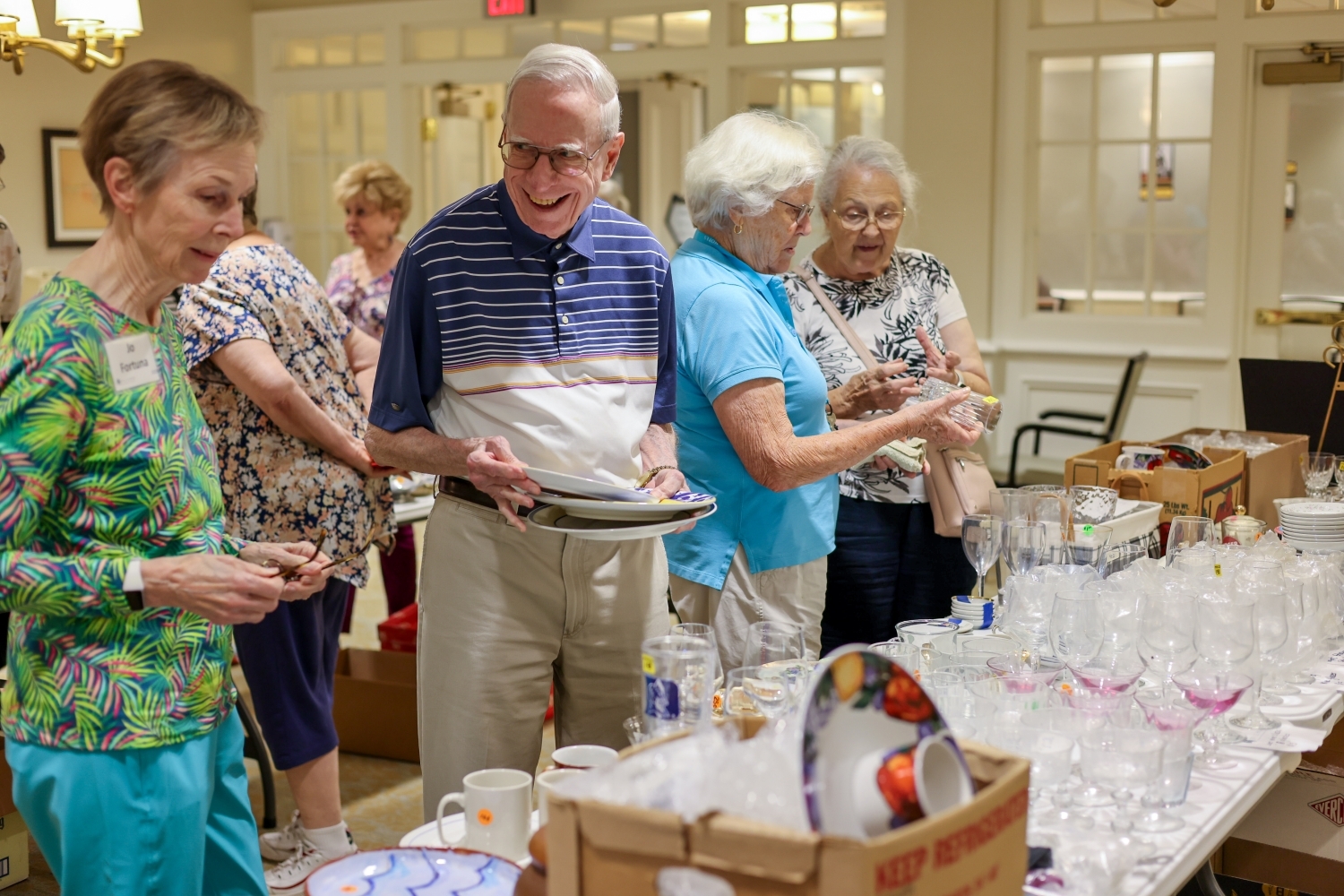
On June 19th, the Keenan Events Center transformed into a miniature marketplace as we hosted one of Still Hopes' most beloved, unofficial holidays: the 25th Annual Rummage Sale. The event was a wonderful chance for our residents, staff, and guests alike to enjoy some retail therapy—thrifting-style, courtesy of generous donations from members of the Still Hopes community. Even better, shopping at this event means spending that everyone (even those who insist they can't add to their growing stash of knickknacks) can feel good about. All proceeds from this fan-favorite occasion went directly towards the Resident Assistance Fund. With residents, staff and community members in attendance, the sale offered can’t beat bargains on finds ranging from curtains to couches to costume jewelry. The rummage sale has quickly gained a reputation as a door busting event, with a crowd of both familiar faces and new attendees gathering hours before opening for a chance to become the proud owner of the most sought-after items. The event earned $7,200 for the Resident Assistance Fund, a charitable endowment dedicated to ensuring our residents who have outlived their resources can continue to reside at Still Hopes. "A Win-Win for Everyone" Michelle Rabon, Still Hopes Director of Life Engagement, is pleased with our community’s continued dedication to the event. “Every year it just gets better and better, and I’m so proud that we have over 20 resident volunteers that make this happen. And, at the end of the day…it all goes back to the residents. So it’s a win-win for everyone,” says Rabon. Wait staff employee and honorary MVP Tahitra (Sandy) Sutton, who arrived promptly at 6:15 in the morning, is proof of this success. She says, “I love these rummage sales. I’m always [between] number one [and] number five [in line] every year, and I made it to get what I wanted to get this time again.” A Long-Lasting Legacy Over two decades into the cherished tradition, and it seems the event’s generated excitement will carry it long into the future of Still Hopes. Whether you're a casual customer or a dedicated deal-finder, we look forward to seeing you next year to uncover even more not-so-hidden treasures! To catch a glimpse of the action from this year's Rummage Sale, please visit Still Hopes’ social media for more. About Guest Writer, Kylie Walker: Kylie Walker is a senior English major and Government/Law minor at Lafayette College in Easton, Pennsylvania. This summer, she is interning with the Still Hopes Communications Department.
Spring Is In The Air, Bringing Family Day Weekend Along With It!
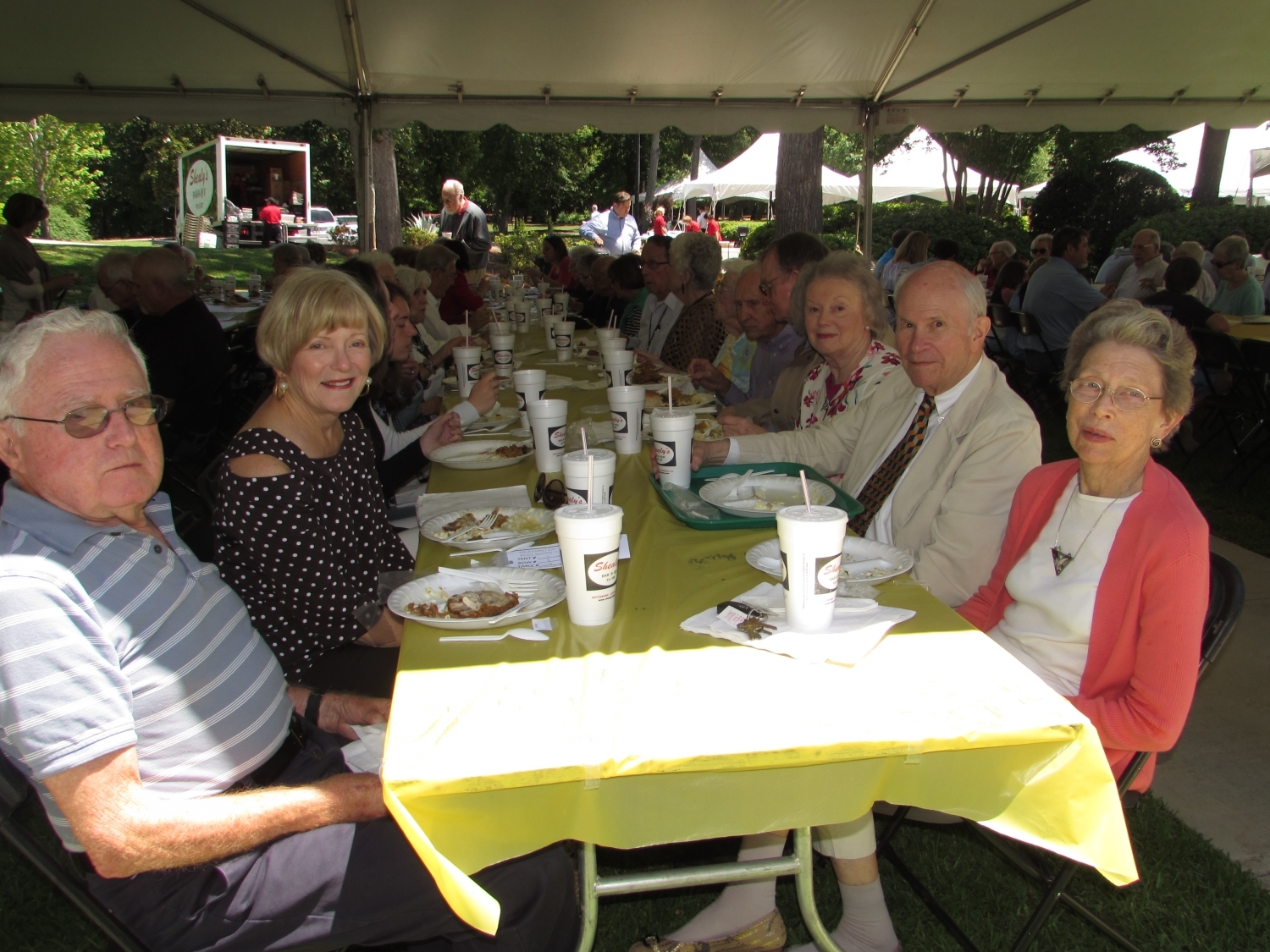
Please read the following message from Sherry French, Still Hopes' Director of Activities: "Family Day weekend at Still Hopes Skilled Nursing West Columbia, SC is coming soon! This fun family weekend is always held the first weekend in May, so this year it falls on May 5-6. On Saturday, May 5, we will host the residents and family members of the Jane Bruce Guignard Skilled Nursing Care Neighborhood, the Rosalie Watson Bomar Neighborhood, and the Sanders Richardson Guignard Rehabilitation Suite. On Sunday, May 6, we will host the residents of our apartments, cottages, concierge suites, and those on our future resident roster. Both days will allow our residents and friends to bring their family members to enjoy sunshine, great food, and fellowship. Tents, tables, and chairs will be set up on the spacious front lawn of the historic Guignard Mansion where a delicious pork bar-b-que and fried chicken catered picnic is served. It is a grand occasion with music by the Southern Rose Carnival Organ, train rides with the Jamil Shriners, balloon animal makers, face painting clowns, and more. Also – make sure you don’t forget the peach ice cream, which is everyone’s favorite! Many of our residents make a family reunion out of the Family Day event each year. What a beautiful time of year in South Carolina to enjoy a picnic and each other!" Please contact Sherry French at (803) 739-5015 for more information. As the only Episcopal-sponsored, non-profit Continuing Care Retirement Community, Skilled Nursing West Columbia, SC, Still Hopes is there for you during every step of your retirement. Located two minutes from downtown Columbia, our life plan community is comprised of beautiful apartments and free-standing cottages nestled on 44 wooded acres creating a relaxing environment for engaged and independent senior living. Take the extra step in your retirement planning and discover the added peace of mind of our many levels of healthcare. If you ever were to need extra services, our compassionate and knowledgeable nursing staff offer individualized care on campus. Still Hopes is a mission-based organization focused on providing the greater Columbia area a hub for health and daily assistance with programs like Solutions for Living at Home, open amenities like our Wellness Center, and rehabilitative services available designed for speedy recoveries.
A Special Thank You
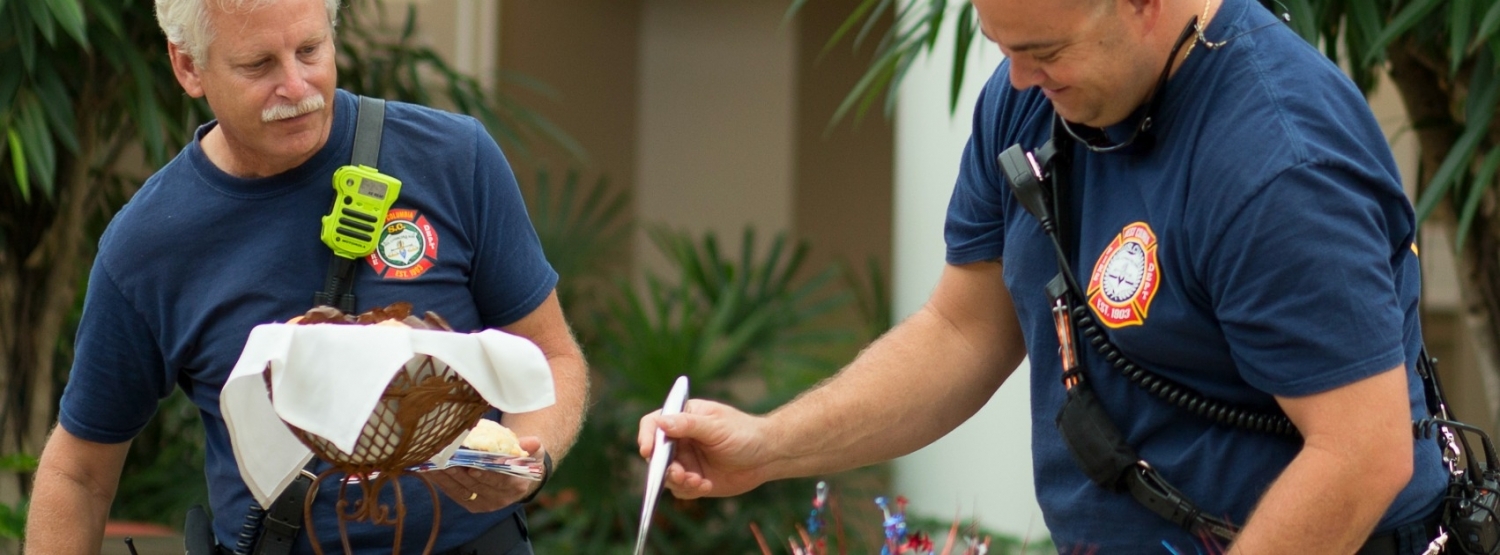
How do you like to say thank you? A nice note? A warm smile? Well at Still Hopes at our assisted living West Columbia, SC, we choose to say thank you with grits, bacon, and eggs. That’s because on Friday, September 9th, Still Hopes hosted our first annual First Responder Appreciation Breakfast on our beautiful Main Street. We wanted to say thank you to our local first responders who do so much every day to serve our community with skill, kindness, and compassion. So who did we invite to come partake in this delicious spread? We extended invitations to the West Columbia Police and Fire Departments, Cayce Public Safety, Lexington County EMS, and all their administrative staff. We were thrilled to have over 75 folks come out and have a delicious breakfast with us. Please take a few moments to click through the pictures below to see more! Once again, thank you to all of our first responders and their loved ones for the sacrifices they make every day to serve their communities. We truly appreciate you! Experience an active retirement lifestyle on your own accord. As a Continuing Care Retirement Community, and the area’s first Life Plan Community in West Columbia, SC, Still Hopes offers an engaged and enjoyable senior adult community for the greater Columbia area. Our campus is continually adding new activities and offerings at the request of our wonderful residents. Learn how to play a new instrument at our retirement community. Paint your next masterpiece. Spend weekends with friends and family. Engage in a spiritual Bible study. Savor the variety at four unique dining venues on campus. Build strength and social ties in our Wellness Center. Plan your days exactly how you like them. Live the active retirement you want in an independent, maintenance-free environment without worrying about the tedious responsibilities.

A Season To Celebrate
'Tis the season for friends and fellowship and the Christmas festivities officially began with the Guignard Society Annual Christmas Party here at Still Hopes skilled nursing West Columbia, SC. Looking festive like a Christmas tree, the Keenan Event Center was filled with colorful decorations as the members of our legacy society gathered and were honored for their generosity. The Guignard Society recognizes those who have chosen to remember Still Hopes with a planned gift as well as those who have given generously with a qualified gift. Mrs. Margaret Payne, Chair of the Society, announced new members and remembered those who passed in 2018. During this business meeting, it was also declared that cash qualifying gifts can now be made through pledges. We hope to welcome more members into the Guignard Society and we are thankful for all who have followed in the Guignard family’s vision of charitable giving to make Still Hopes the wonderful community we call home. If you are interested in charitable giving to Still Hopes or becoming a member of the Guignard Society. Please contact, Meredith Walker, Director of Development at (803)739-5006.
Sam's Bread Pudding; A Labor of Love
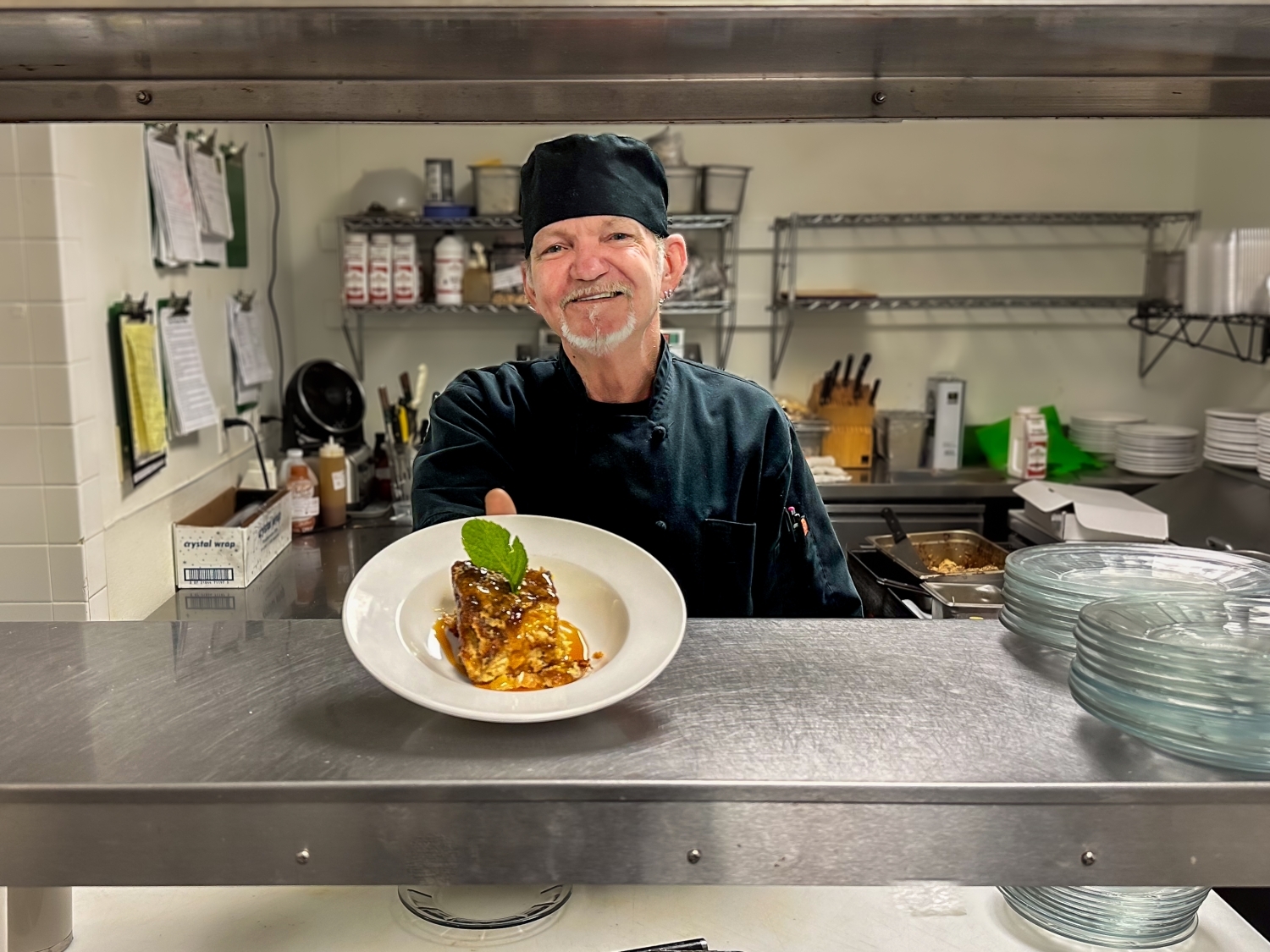
Walk through any kitchen and ask any seasoned chef and they will tell you their cooking career began long before they could use their talents to draw a paycheck, and it’s no different for Still Hopes’ pantry and pastry cook, Sam Oxner. Sam has been cooking for a living since he was 18 years old, but he’ll tell you he fell in love with cooking before he could appropriately reach the ingredients on the countertop. Sam found his love for cooking while watching his grandmother. He describes her as a doting woman who used food to show her love and devotion to her family. He only found out late in her life that her Catfish Stew, a favorite dish of Sam’s and his family, was actually one of his grandmother’s least favorite dishes in the world. She never ate the fruits of her all-day labor, but frequently made it to bring joy to those she loved. Sam and his grandmother frequently baked together, and it remains Sam’s favorite culinary discipline. A fan of French toast as a child, he was immediately drawn to her bread pudding because 8 year old Sam thought it was “French Toast but Thicker.” His primary job at the time? Licking the beaters! He didn’t think much of his time waiting for his grandmother to sneak him a taste of the work in progress, but he didn’t realize what was truly at play. “I was always looking to beaters, and so I really didn't think I was learning anything. But then after, after it all goes down[…] I was doing more than licking the beaters. I was paying attention to what she's doing. And I would watch her […] and I learned to make things the old fashioned way.” Today he can make 1000 different variations of her bread pudding. He says understanding the building blocks of a good base is crucial, but after that the possibilities are endless. He brought in a new flavor combination today – pineapple and cream cheese. It was balanced, caramelized, warm, moist, decadent – it was everything you would want in a bread pudding. It truly was a testament to his love of baking and his grandmother’s love for him. Taste it for yourself! Sam’s pineapple and cream cheese bread pudding recipe is just below. Ingredients · 1 can (20 ounces) unsweetened pineapple chunks, undrained · 10 cups cubed dinner rolls. Think 17-18 rolls · 1 package (8 ounces) cream cheese, softened · 3 tablespoons confectioners' sugar · 5 large eggs · 1 can (14 ounces) sweetened condensed milk · 1/2 cup heavy whipping cream · 2 teaspoons vanilla extract Sauce: · 1 can (14 ounces) sweetened condensed milk · 1/4 cup butter, cubed · 1-1/2 teaspoons vanilla extract Directions 1. Drain pineapple, reserving 1/3 cup juice. Place half of the bread cubes in a greased 13x9-in. baking dish. In a small bowl, beat cream cheese and confectioners' sugar until smooth; drop by tablespoonfuls over bread cubes. Top with remaining bread cubes and pineapple. 2. In a large bowl, whisk eggs, milk, cream, vanilla and reserved pineapple juice until blended; pour over pineapple. Refrigerate, covered, several hours or overnight. The mixture should be well saturated, but not liquidy. If you press your finger into the mixture and liquid pools, it is too wet. Don't be afraid to add more bread and wait another hour if your wet ingredient balance isn't right. 3. Preheat oven to 350°. Remove bread pudding from refrigerator while oven heats. Bake, uncovered, until lightly browned, 25-35 minutes. 4. In a small saucepan, heat milk and butter until butter is melted. Remove from heat; stir in vanilla. Just before serving, drizzle over warm bread pudding.
Rosalie W. Bomar Neighborhood
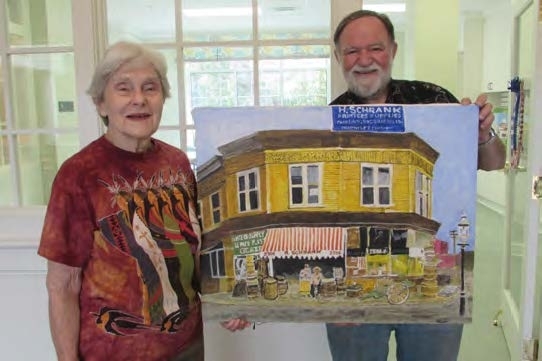
A great story from a resident at our Retirement Community West Columbia, SC. Herman Shrank and Eva (Mamie) Greenberger Schrank sit in front of their paint store on the corner of E. 183rd Street and Arthur Ave. in the Bronx. I believe it's the summer of 1908 because Mamie looks pregnant and my mother, Edna Schrank Meltzer, their first child, was born August 22, 1908. They bought the store in 1900 (I think). Grandpa bought several stores adjacent to his on Arthur Ave. He died in 1958 and Edna (my mom) and Uncle Sanford Schrank jointly owned it until sometime between 1965 and 1970. From the time I remember, the outside was painted a bright orange and the barrels were painted with multi-colored horizontal stripes you couldn't miss seeing! Grandpa had a black cat call "Bum" which lived in the store and hunted in the neighborhood during the day. One of my memorable moments as a little kid was the time grandpa gave me money to buy liver for the cat at the butcher shop down the street. When I returned with it, Grandpa and I unwrapped the liver. Bum mewed happily and rapidly ate it in no time at all. There are many elements in the photo that you'll not see today. In the picture you see a wooden sidewalk which is still there, a gas street light, which is not, and some signs which are mighty interesting because of the wording or what they advertise. Note that the rental sign is for 'flat to let.' The paint sign probably promotes white lead paint. When I was little, there was a potbellied stove which burned wood to make heat in the winter. There were red pumps with handles which you pumped to fill requests for benzene, turpentine, and other liquids today considered hazardous, and which you cannot buy in a paint store. The store had shelves of items floor to ceiling and to reach them there was a ladder which could be slid along the wall to reach the objects. It was odd-shaped, an irregular five-sided figure. The back wall and the left side had shelves. The right side had the red pumps and counters and a large circular piece set on smaller barrels which served as a base. Around it were four or five smaller barrels which served as a base. Around it were four or five small barrels and wooden boxes which served as chairs. When I was in high school, some of the neighborhood retirees would meet in teh store at the round table and play cards and drink whiskey -- the nights of the round table smoking cigars. Behind the counter along the back wall Grandpa had hung a picture of dogs sitting at a round table drinking and smoking cigars. On the wall behind the cash register was a sign that said "In God we trust, all others pay cash," which I thought was very clever. In front on the counter was a wonderful gold and silver cash register. It was quite splendid.
Recognizing and Managing Caregiver Burnout
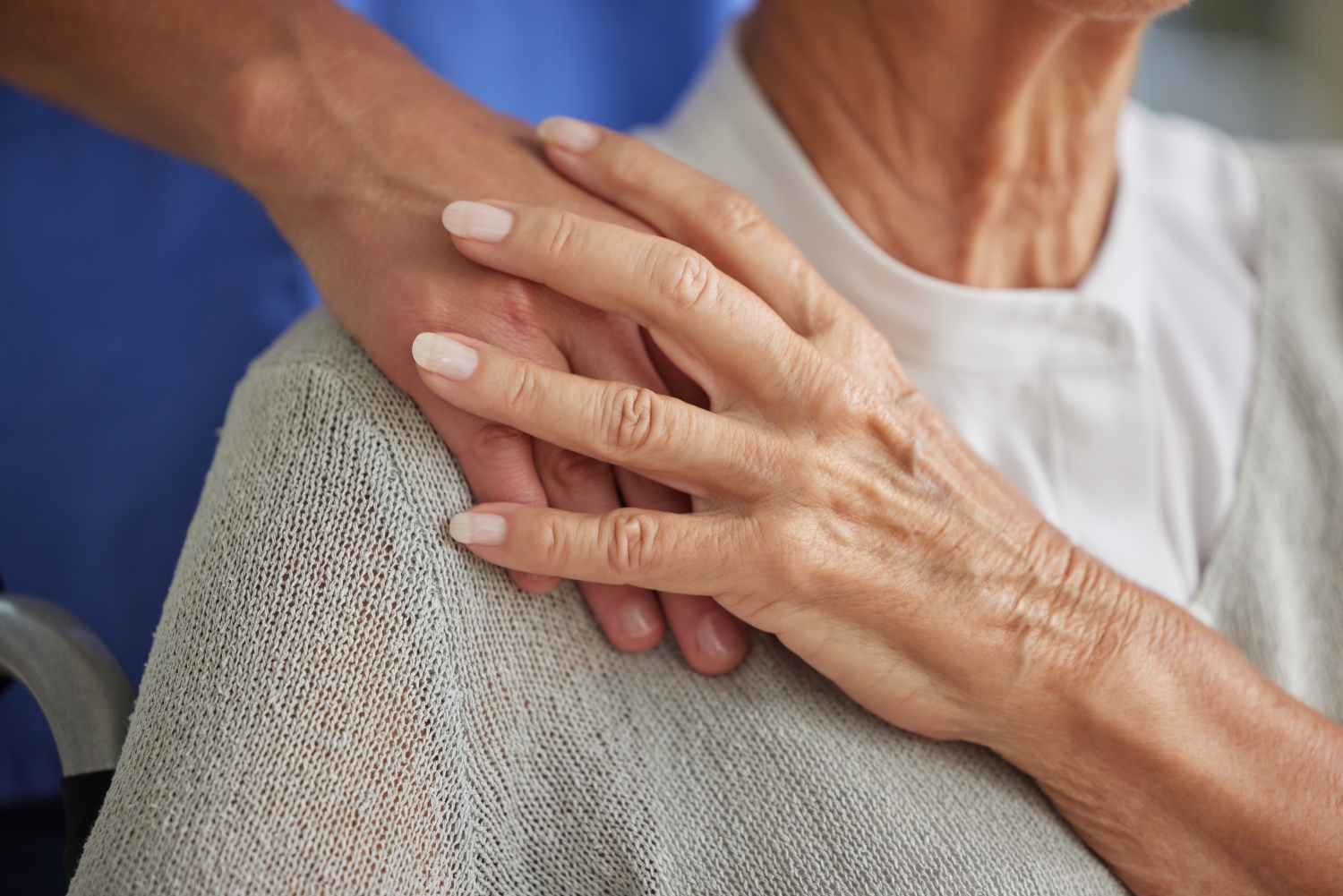
Caring for a loved one, especially someone with Alzheimer’s disease, is an important but often overwhelming task. The constant emotional, physical, and mental demands can lead to caregiver burnout, a state of exhaustion where it becomes difficult to continue providing care. Understanding the signs and knowing how to manage burnout can help caregivers maintain their own well-being while still supporting those in their care. What is Caregiver Burnout? Burnout happens when the stress of caregiving builds up over time. It can cause feelings of frustration, fatigue, and isolation. Physical symptoms, such as headaches or disrupted sleep, are also common. If burnout is not addressed, it can negatively affect both the caregiver’s health and the quality of care provided. Recognizing the early signs is essential. Ways to Manage Caregiver Burnout At Still Hopes, we understand the complexities of caregiving. That’s why we offer several programs designed to relieve caregiver stress, allowing you time to recover while your loved one receives quality care. Respite Care: Our respite care program offers temporary stays, giving caregivers a chance to step away for a few days or weeks. This provides a break, allowing you time to rest while ensuring your loved one is cared for in a safe environment. Adult Day Programs: Still Hopes also provides an Adult Dementia Day Program in a secure, group setting. This allows caregivers to have time for themselves while their loved one participates in supervised activities and social interaction. Support Groups: Participating in a caregiver support group is another valuable resource. These groups allow you to connect with others in similar situations, share advice, and find emotional support. Support groups can be in-person or virtual, depending on what best fits your needs. Join Us at the Columbia Walk to End Alzheimer’s Still Hopes will also be participating in the Columbia Walk to End Alzheimer’s on Saturday, October 19th. This event supports Alzheimer’s research and care, while giving caregivers and their loved ones the opportunity to come together with the community. It’s a meaningful way to raise awareness while also finding solidarity with others. Taking care of yourself is essential to being the best caregiver you can be. Still Hopes is here to provide the support and services that make this possible. Reach Out for More Information To learn more about our respite care or day programs, contact us or visit our Greenway at Still Hopes website. We are here to help you manage the challenges of caregiving with the support you deserve.
Re-Opening The Still Hopes Pool To Residents and Why
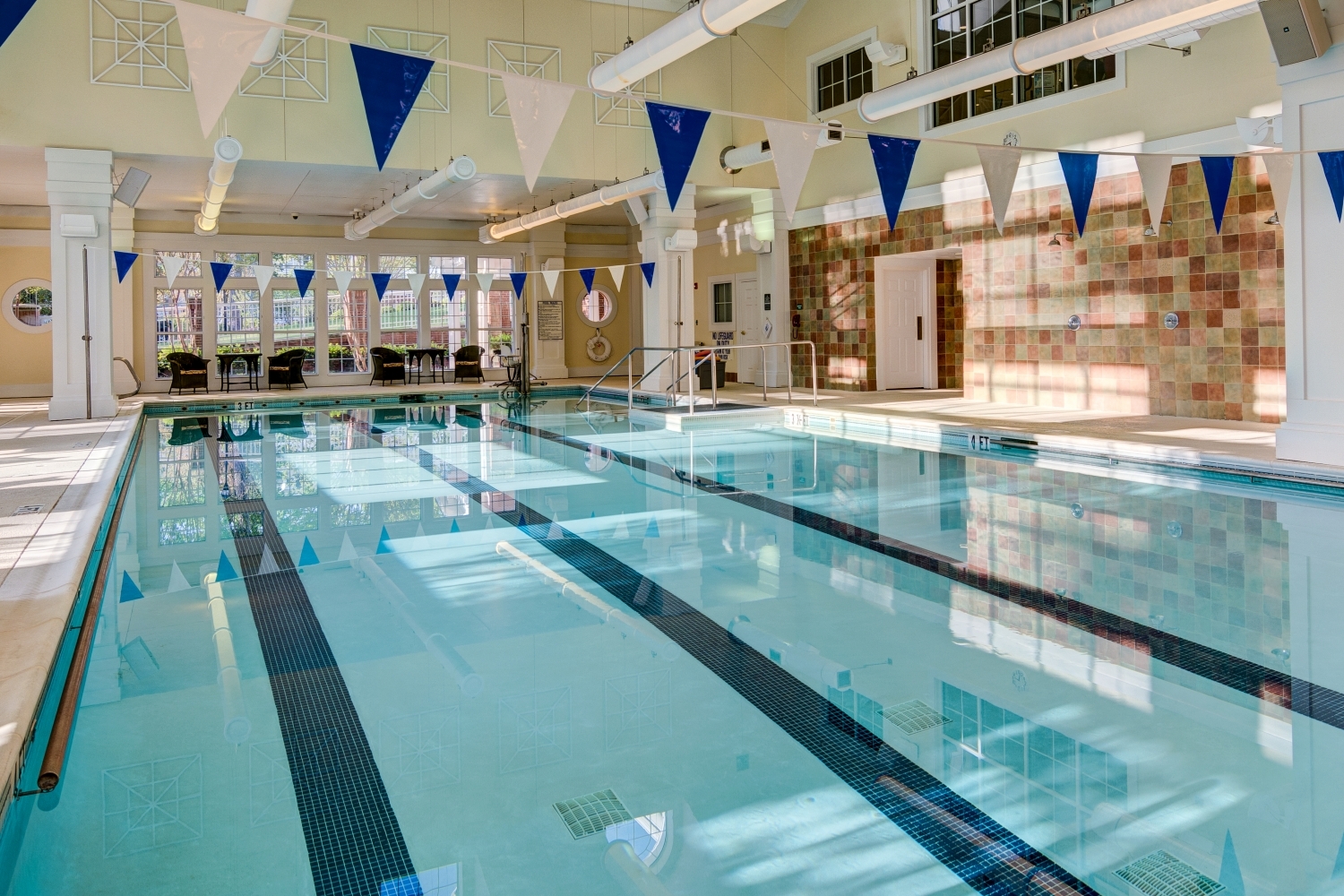
With summer upon us at our Retirement Home in West Columbia, SC, it’s no surprise that folks are wanting to take a dip in the pool. However, with all the questions surrounding COVID-19, some are wondering if pools are even safe any more. While we know that information can change, Still Hopes Retirement Community in Columbia SC has been closely following the information disseminated by health authorities like the Centers for Disease Control and Prevention (CDC). Based upon the information we have studied, Still Hopes has decided to re-open our indoor pool on a very limited basis to our current residents that live on campus. Our pool has been completely closed since March of this year and the decision to re-open has been approached with extreme caution. However, the Still Hopes Retirement Community in Columbia SC leadership team, including Still Hopes’ Director of Wellness, Denise Heimlich, feel confident that re-opening on a limited basis is a safe measured step. Denise explains “The CDC states that there is no current evidence that the novel coronavirus can spread through treated pool water. Our pool uses an ultraviolet sanitation system as well as a small amount of chlorine. Both have been shown effective in destroying the virus. The CDC has issued guidelines for the safe operation of swimming pools that we are following closely. The most important is to maintain a distance of at least 6 feet from any other person unless from the same family. People are urged to maintain social distancing whether in the pool or on deck. The primary means of viral transmission is through speaking, coughing, sneezing, talking, or singing.” “The Still Hopes pool has a large ventilation system that moves huge amounts of air per minute. Air exchange is important for removing suspended viral particles. We measured the square footage of the pool, so we know, from CDC guidelines that we can have no more than 8 people in the pool at a time. Thus, we have check in times for pool sessions and swimmers will reserve their time in the pool so that we can keep count of pool users.” says Denise. In conclusion, Denise states “Other guidelines state that all adults should wear a mask while on deck, unless there is a medical reason not to do so, but do not wear a mask in the pool. Water soaked masks severely limit breathing. No equipment is to be shared. If you bring your own, don’t share it. We will no longer leave equipment such as noodles on deck for anyone to use. New noodles will be offered for sale in the Wellness Center. No one is to use the locker rooms for showering or changing clothes. All touchable surfaces will be sanitized by staff after each pool session. If people carefully follow recommended procedures, the risk of getting COVID-19 should be low.” So, with all of these things in mind, Still Hopes looks forward to offering this wellness option to our residents two days a week at limited times beginning July 14th. With all the stress that comes along with living in a global pandemic, Still Hopes strives to meet as many of our residents’ needs as possible. It has been shown that one of the most common mental benefits of exercise is stress relief, and we believe our pool can play a vital role. What are some of your favorite ways to relieve stress right now? Please let us know over on our Facebook page!